
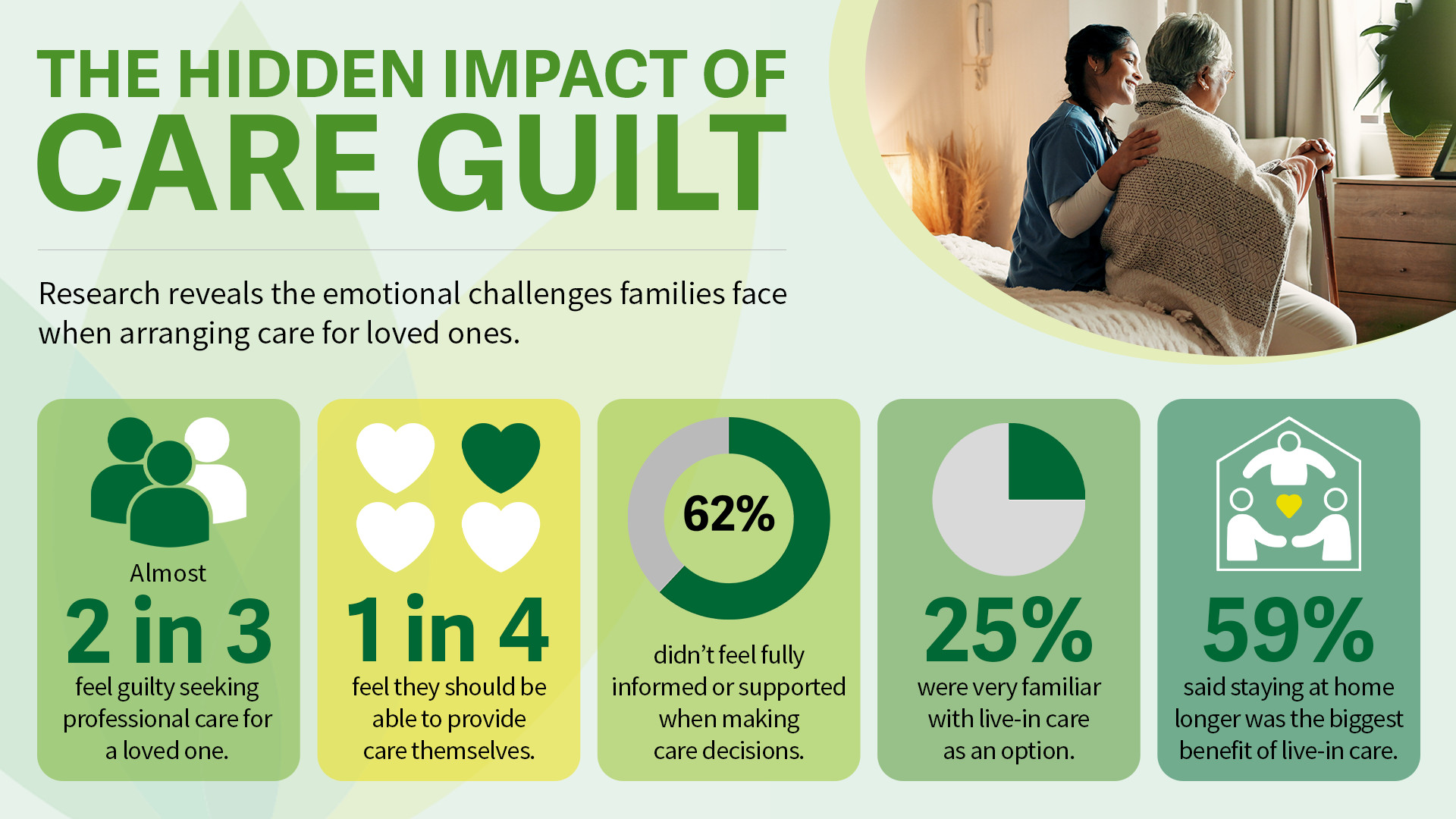
National research undertaken by Trinity Homecare Group has revealed almost two thirds of people feel guilty seeking professional care for their loved one, with a quarter feeling they should be able to provide this care themselves.
The home care specialist asked hundreds of people across the country about their experiences of ‘care guilt’, almost a third of whom (31%) had begun researching care options after a fall or sudden decline in health, while a further 25% were prompted to do so after a diagnosis of dementia or another serious health condition.
Managing Director Simon Yeoman explained that, with care guilt seemingly on the rise, Trinity wanted to explore how the sector could support relatives who were experiencing turmoil over their loved one’s care arrangements.
“Looking after an elderly or unwell family member is something most of us are motivated to do,” he added. “But in reality, this often has to be balanced with working and looking after other dependents such as children and we frequently begin to see a real impact on the wellbeing of the carer, especially if their loved one’s condition worsens.
“We want to reassure families that seeking professional care is a sensible and loving choice that can help protect their own wellbeing. Having a trusted team in place for day-to-day support also enables them to spend more quality time with their loved one.
“The research further highlighted that being informed about all of the options available could be vital in helping to mitigate care guilt.”
Almost half of respondents (49%) sought advice from a GP or other healthcare professional before making a care arrangement decision, while 18% turned to the internet for advice, and 9% sought word of mouth recommendations.
A total of 48% felt they ‘somewhat’ had enough information and support to make a confident decision, and a further 14% said they did not at all. And when it came to the option of live-in care, only a quarter said they were ‘very familiar’ with the concept and 59% said their relative being able to stay in their own home for longer was the most appealing aspect of this type of care.
Around had 30% chosen a residential or nursing home, while 13% opted for live-in care, 12% for visiting care and 16% relied on informal care provided by family and friends. Across all respondents, the main factors in which arrangement was chosen were quality of care, cost and keeping a relative in their own home.
Simon added: “We saw a real difference in approach depending on the age of the respondents, 42% of which were 30 to 40 and 27% aged 41 to 50.
“Those in the 30 to 40 age bracket wanted to ensure the care arrangements chosen kept their loved ones nearby, and felt researching care options as early as possible was hugely important.
“Those aged 41 to 50 were more likely to opt for a residential or nursing home arrangement and placed high importance on involving their relative as much as possible in the decision-making process.
“Arranging care for a loved one can be an extremely difficult decision, but we hope our research will help underscore how important knowledge and support are when it comes to this process.
“Everyone’s situation is different so it’s not a ‘one size fits all’ answer. What matters is that people have all of the options explained to them so they can choose confidently and that their loved one and they feel happy and well looked after whatever arrangement they decide upon.”
Founded in Wimbledon over 30 years ago, Trinity Homecare delivers everything from companionship to dementia care through its live-in home care and visiting care services, helping people across England live longer, healthier, happier lives.
For more information, visit: www.trinityhomecare.co.uk