
Blairgowrie innovation by charity celebrates two year success
An innovative Perthshire conservation project which uses ‘traffic lights’ to protect juvenile salmon is celebrating its second year without fish mortality.
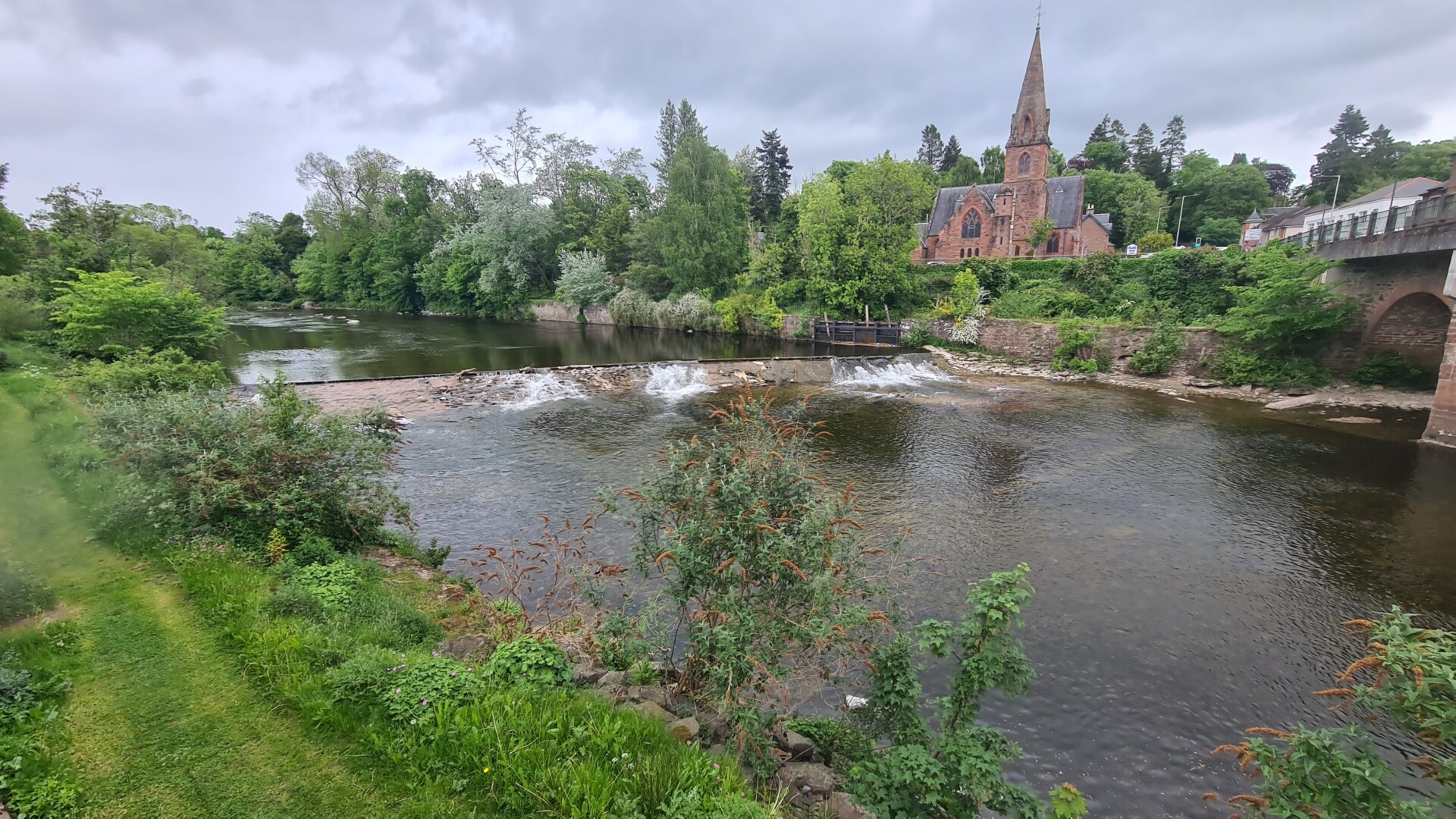
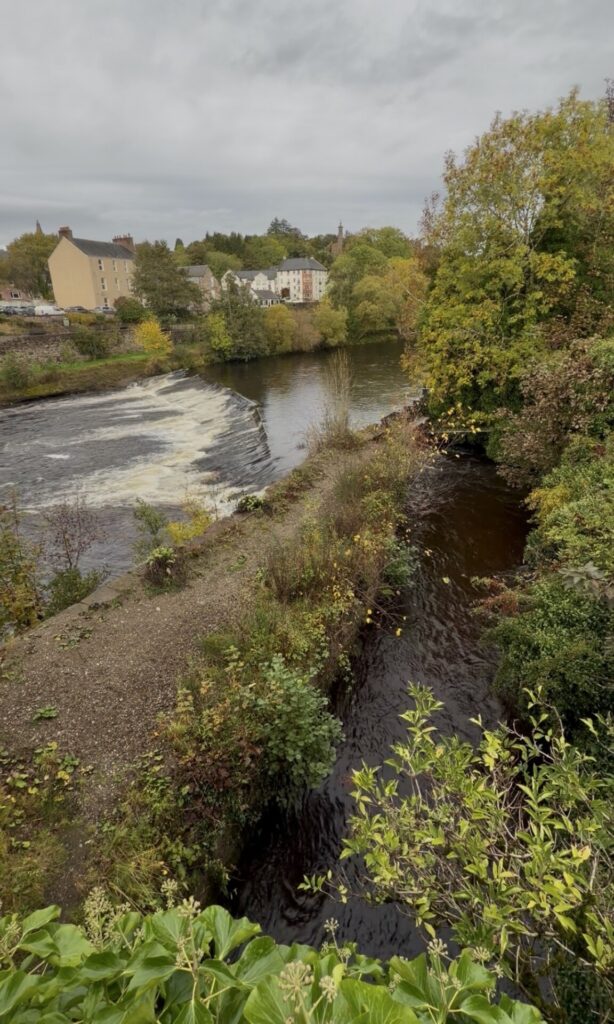
For almost a decade, young salmon or smolts were dying in high number during drought periods on the River Ericht, as they attempted unsuccessfully to pass two historic mill weirs at Blairgowrie.
Dangerously low river levels were causing smolts to become trapped at the Victorian structures, a situation exacerbated by local businesses legally abstracting water from the river, under licence, for legitimate operations.
However, the introduction of a collaborative traffic light system two years ago by charity, Tay Rivers Trust, abetted by the community, is making a crucial difference to the survival of salmon – officially classed as an endangered species.
Researchers tracked 15 years of flow data before introducing a system which activates during red light periods when smolts moving down the river are likely to be at their most vulnerable.
When these red warnings trigger, Tay Rivers Trust communicates with businesses holding water abstraction licences from SEPA, seeking their cooperation to reduce their water out-take.
Sacrifices made by those businesses can get 25 percent more water down the system at those critical periods, increasing the chances of juveniles crossing the weirs successfully.
If there is still insufficient water, gates to an adjacent mill lade are opened to enable the young fish to bypass the weirs completely and swim down the lade channel before eventually re-entering the system further below the weirs.
That intervention has proved to be highly effective over the past two years.
Despite the last two springs being amongst the driest in recent times, no smolt mortality has been observed at the weirs – a testimony to the scheme and the collaboration between the charity, local businesses and the Blairgowrie community.
If fish become trapped in low water they are easy prey for predators such as piscivorous birds and otters – a fate regularly witnessed prior to the project’s commencement.

“When we went into the project four years ago, I didn’t think it would be a traffic light system. Our first year was about doing the research and working out how smolts react in these difficult situations. It was all part of developing the project, but it is something we are very proud of,” said Jerry Saunders, Trustee of the leading charity, Tay Rivers Trust.
“We’ve just experienced arguably the two driest springs in 60 years and there has been no smolt mortality observed.
“As part of the community buy-in, local people act as river watchers during the critical red light periods and they report that predation is far lower than they’ve seen in earlier years, so the system has been proven to be highly successful.”
The River Ericht is an important spawning and nursery area for salmon within the wider River Tay catchment, which spans 10% of Scotland’s land mass.
The project has been supported by Crown Estate Scotland and Scottish Government with partners including Perth and Kinross Council, local businesses, Blairgowrie Rattray and District Angling Association and BAM Nuttall Community Fund.
One of the businessmen supporting the salmon project is local farmer, Peter Thomson.
For the past two years, he has been taking less water than his licence permits, for his hydro clean energy scheme, during red light periods.
“At these relatively low flows, it makes sense for the water to go down the river so that the salmon can continue on,” he said.
“If we can work with the salmon interests and make sure there is always enough water for the salmon, but that we get the surplus in higher flows, then it can work well together.”
Tay Rivers Trust is now working on several other important projects throughout the entire Ericht catchment.